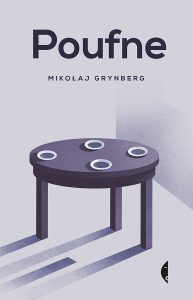
Mikołaj Grynberg’s book, Confidential, was published by the publishing house Czarne in 2020.
Tolstoy said that all happy families are alike, and every unhappy one is unhappy in its own way. But what about the families who had no say in their own fate?
Confidential consists of seemingly unconnected short stories. These stories are photographs of a kind. And photography, unlike literature, is not subject to the laws of Kronos. It frames a picture of the here and now, without past or future. Grynberg has recorded his characters in very intimate poses. He frames them in a slightly ironic way, letting a lot of warm light into his lens. Each photograph is a separate world, a finite whole containing a record of sounds, smells, impressions and feelings. At the same time, one photo leads to another. Some of the recorded gestures repeat themselves, which allows the watchful eye to recognise members of the same family in the characters.
In fact, the book is a kind of family album. It is only when we put all the images together that we see the invisible thread connecting them and giving them a common meaning. That thread is the family. But the family portrayed by Grynberg is connected by more lasting ties than kinship. It is bound together by common memory, trauma and mystery. And above all, mutual love. This is a Jewish family that survived the Holocaust, a family that was supposed to cease to exist, but stubbornly persists. And it will continue as long as the relay of generations continues. And this album is the best proof of that.
Grynberg’s family decided for themselves that they would be happy, and regardless of all external factors, they have consistently stuck to their resolve.
Currently the book is only available in Polish under the name Poufne.
You can find more recommended books here.
[:pl]Książka Mikołaja Grynberga, Poufne, wydana była przez Wydawnictwo Czarne w 2020 roku.
Tołstoj powiedział, że wszystkie szczęśliwe rodziny są do siebie podobne, a każda nieszczęśliwa jest nieszczęśliwa na swój sposób. A co z rodzinami, które nie miały wpływu na własny los?
Poufne składa się z pozornie niepołączonych ze sobą krótkich opowiadań. Opowiadania te są pewnego rodzaju fotografiami. A fotografia ma to do siebie, że w przeciwieństwie do literatury nie podlega prawom Kronosa. Zamyka w kadrze obraz tu i teraz, bez przeszłości i przyszłości. Grynberg utrwalił swoich bohaterów w bardzo intymnych pozach. Kadruje w nieco ironiczny sposób wpuszczając w swój obiektyw dużo ciepłego światła. Każde zdjęcie jest osobnym światem, skończoną całością mieszczącą zapis dźwięków, zapachów, wrażeń i uczuć. Równocześnie jedno zdjęcie prowadzi do kolejnego. Niektóre z utrwalonych gestów powtarzają się, co czujnemu oku pozwala rozpoznać w bohaterach członków tej samej rodziny. Bo w istocie książka jest swoistym albumem rodzinnym.
Dopiero zestawiając ze sobą wszystkie obrazy widzimy tę niewidzialną nić łączącą je i nadającą im wspólny sens. Ta nić to rodzina. Ale rodzina portretowana przez Grynberga jest połączona trwalszymi więzami niż te pokrewieństwa. Spaja ją wspólna pamięć, trauma i tajemnica. A przede wszystkim wzajemna miłość. To rodzina żydowska, która przetrwała Holokaust, rodzina, która miała nie istnieć, ale nadal uparcie trwa. I będzie trwać dopóki następuje sztafeta pokoleń. A ten album jest na to najlepszym dowodem.
Rodzina Grynberga sama postanowiła, że będzie szczęśliwa i niezależnie od wszelkich zewnętrznych czynników konsekwentnie trzyma się swojego postanowienia.
Więcej rekomendowanych książek znajdziecie tutaj.
[:]